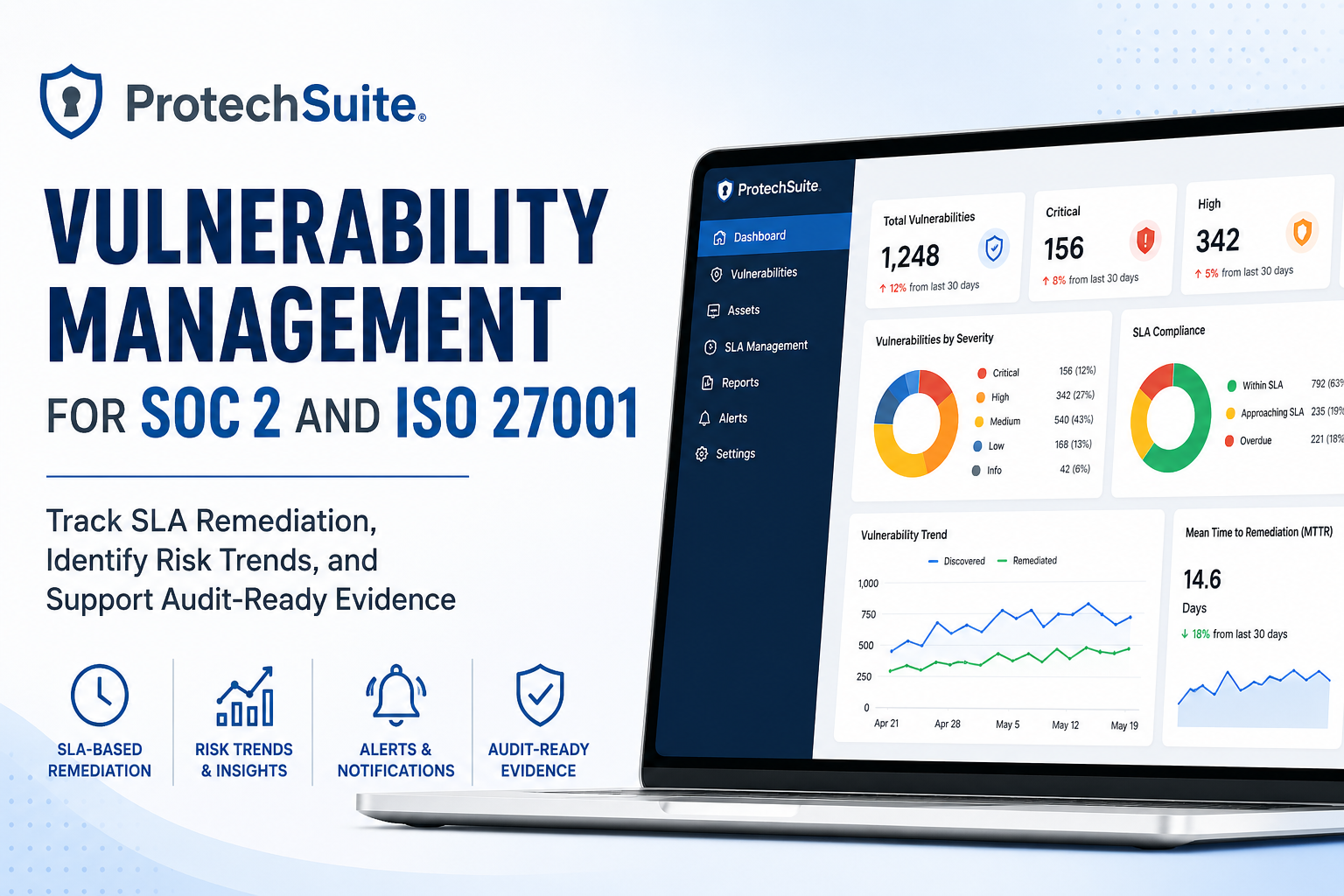
We have officially launched the ProtechSuite Vulnerability Management Module.
Vulnerability management is an important part of any security and compliance program. Tools like Microsoft Defender, Malwarebytes, and endpoint monitoring solutions help organizations identify security weaknesses across their environment. For example, our ProtechSuite Endpoint Agent helps provide visibility into device-level security and configuration data. But once vulnerabilities are detected, organizations still need a clear way to track remediation, monitor due dates, align timelines with internal policies, and demonstrate that the process is being managed consistently.
That is where ProtechSuite helps.
ProtechSuite helps turn vulnerability management data into compliance visibility by tracking remediation against defined SLA timelines, highlighting risk trends, and supporting audit-ready evidence for SOC 2 and ISO 27001.
This approach to vulnerability management for SOC 2 and ISO 27001 helps organizations demonstrate that vulnerabilities are not only identified, but actively managed and remediated within defined timelines.
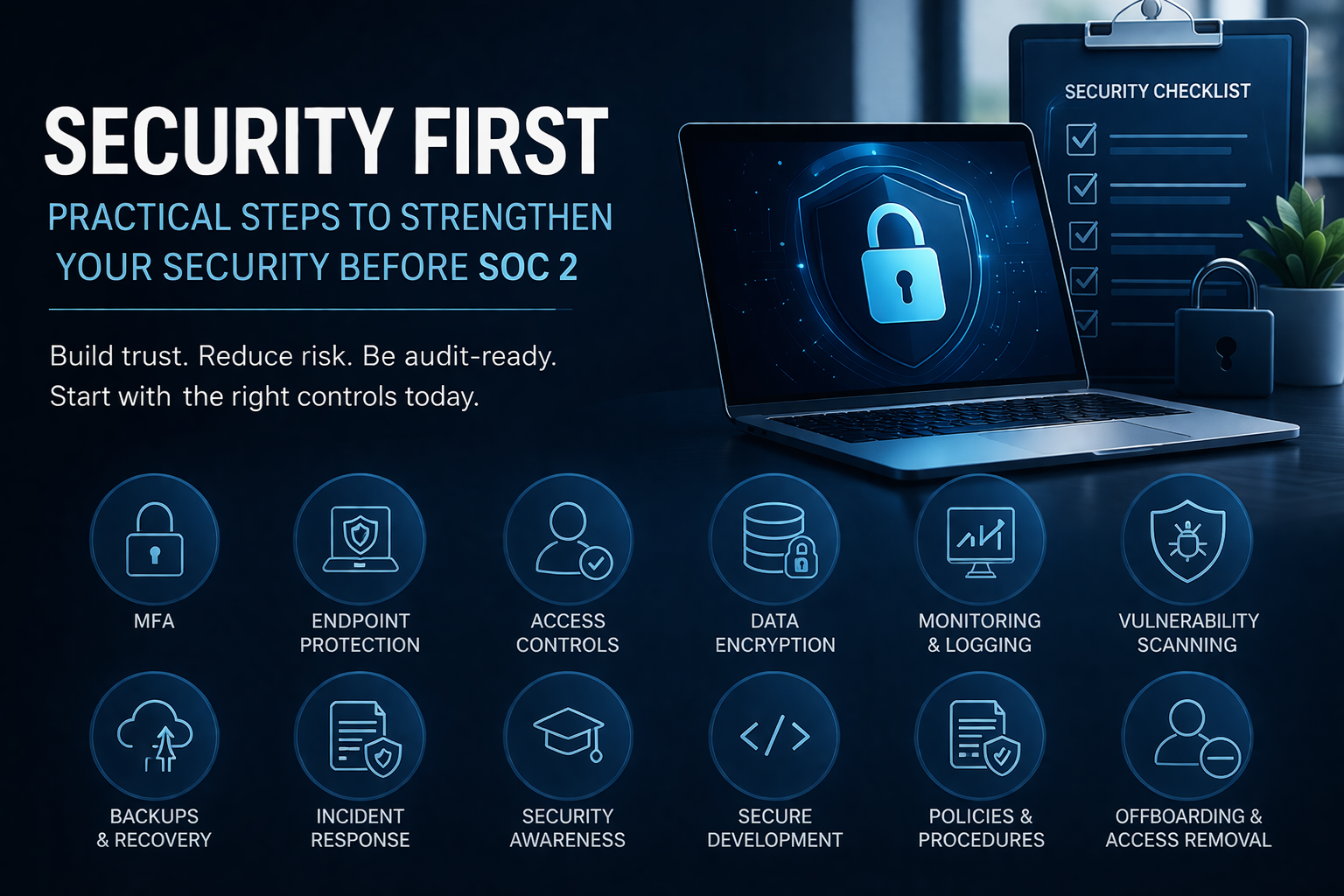
Effective vulnerability management requires more than identifying issues. As outlined in our SOC 2 security basics guide, organizations need to demonstrate that controls are operating consistently over time. Organizations need to track remediation, enforce SLA timelines, monitor overdue risks, and maintain clear evidence that vulnerabilities are being managed over time.
Why Vulnerability Management Matters for SOC 2 and ISO 27001
Vulnerability data can quickly become overwhelming.
Security tools may identify missing patches, outdated software, or known vulnerabilities across multiple assets. That information is valuable, but for compliance, the key question is:
What are we doing about it?
ProtechSuite connects vulnerability management activity to SLA tracking, alerts, and audit-ready evidence so organizations can clearly demonstrate that vulnerabilities are being managed.
This helps teams understand:
- Which vulnerabilities are most severe
- Which assets are affected
- Which vulnerabilities are approaching or past their SLA
- Whether remediation performance is improving
- Whether internal policy timelines are being met
Instead of a disconnected technical process, vulnerability management becomes part of a continuous compliance program.
Detecting vulnerabilities is only the first step.
Organizations also need to prioritize, track, and resolve them within defined timelines. This is often where gaps appear, especially when preparing for SOC 2 or ISO 27001, where consistency over time matters.
ProtechSuite helps bridge that gap by collecting vulnerability management data and presenting it in a way that supports remediation tracking, accountability, and compliance reporting.
A Service Level Agreement, or SLA, defines how quickly vulnerabilities must be remediated based on severity.
The exact timelines vary by organization, but the key requirement is consistency. If internal policies define remediation expectations, organizations should be able to demonstrate that those expectations are being met.
ProtechSuite allows organizations to configure SLA timelines aligned with their policies and compliance requirements. It then provides visibility into:
- What is within SLA
- What is approaching its due date
- What is overdue
- How remediation performance is trending
This helps answer a critical compliance question:
Are we meeting our defined remediation timelines?
Visibility Into Risk and Vulnerability Trends
A list of vulnerabilities provides a snapshot. Trends show whether risk is improving or increasing over time.
ProtechSuite helps organizations track:
- Vulnerability trends by severity
- Discovery versus remediation rates
- SLA compliance trends
- Overall risk movement over time
These insights help teams quickly identify where attention is needed.
For example, if vulnerabilities are being discovered faster than they are resolved, it may indicate a need to adjust resources or processes.
Severity Distribution and Prioritization
Not all vulnerabilities carry the same risk.
ProtechSuite provides visibility into severity distribution so teams can focus on what matters most. This helps organizations prioritize remediation efforts, allocate resources effectively, and reduce overall risk.
Mean Time to Remediation (MTTR) measures how long it takes to resolve vulnerabilities after they are identified.
ProtechSuite provides visibility into MTTR so organizations can better understand and track remediation efficiency over time. A decreasing MTTR typically indicates improvement, while an increasing MTTR may highlight delays that need attention.
Alerts for New and Overdue Vulnerabilities
Vulnerability management requires timely action.
ProtechSuite provides alerts when:
- New vulnerabilities are detected
- SLA due dates are approaching
- Vulnerabilities become overdue
This helps ensure issues are addressed before they impact compliance or increase risk.
Supporting Multiple Vulnerability Sources
Organizations may rely on one or multiple vulnerability detection tools.
ProtechSuite collects vulnerability data from sources such as Microsoft Defender and Malwarebytes and presents it within a single compliance-focused workflow. This helps maintain consistent remediation tracking and improves visibility across the environment.
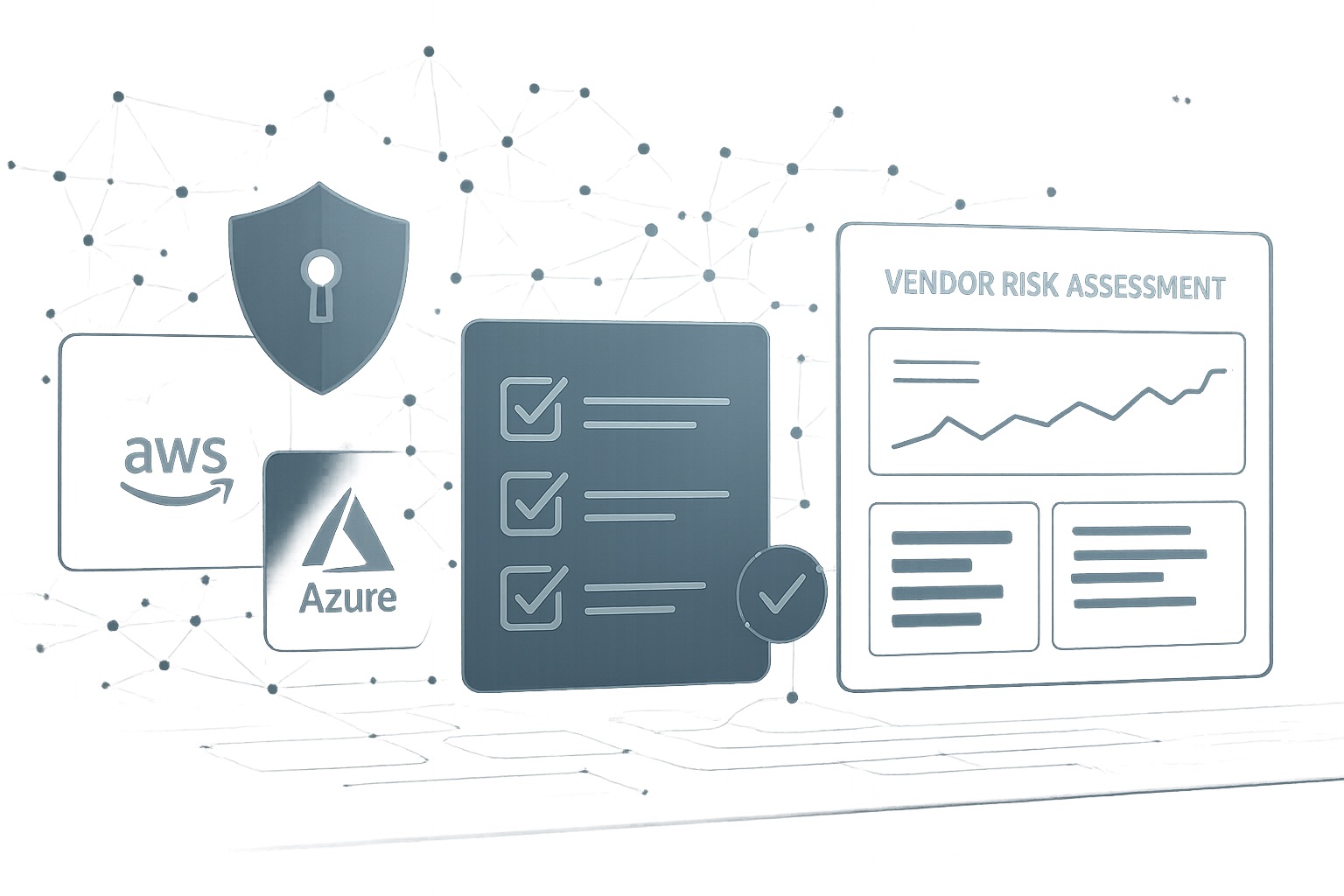
This approach is similar to how organizations centralize other areas of risk, such as third-party vendor management, within a single compliance workflow.
Clear Insights and Recommendations
A common challenge in vulnerability management is knowing what actions to take.
ProtechSuite provides insights that help interpret vulnerability data and highlight where attention is needed. This helps teams understand whether remediation is on track, where risk is increasing, and how their efforts align with compliance requirements.
Vulnerability Listings Built for Action
ProtechSuite provides a clear, actionable view of vulnerabilities so teams can quickly understand what needs attention.
Users can see what the vulnerability is, how severe it is, how many assets are affected, and when it needs to be addressed based on SLA timelines. From there, they can drill into details or return to the source system to take action.
Making Vulnerability Management Evidence Easier for SOC 2 and ISO 27001
For SOC 2 and ISO 27001, organizations must demonstrate that vulnerability management processes are operating effectively over time.
This includes showing that vulnerabilities are identified, prioritized, tracked, and remediated within defined timelines, with clear visibility into overdue items and trends.
ProtechSuite helps centralize this information, making it easier to support audits and maintain continuous compliance.
Closing Thoughts
Vulnerability management is not only about identifying security issues. It is about showing that those issues are being managed consistently.
ProtechSuite helps turn vulnerability management for SOC 2 and ISO 27001 into a structured, measurable process by tracking SLA-based remediation, highlighting risk trends, and supporting audit-ready evidence.
Whether an organization is just getting started or scaling its security program, ProtechSuite helps make vulnerability management easier to manage, easier to explain, and easier to demonstrate.