Employee Onboarding Security Checklist for Small Businesses
Hiring a new employee is exciting for any small business. It usually means growth, momentum, and new opportunities.
But many small businesses unintentionally overlook something important during onboarding: security and compliance.
In larger organizations, employee onboarding is often tied directly to cybersecurity and governance processes. Access requests are documented, devices are secured, policies are acknowledged, and approvals are tracked. In smaller businesses, onboarding is often handled informally, especially during periods of rapid growth.
That can create unnecessary risk.
A new employee may receive excessive access, use an unsecured personal device, or retain access long after leaving the company. Over time, these gaps can become operational, security, and compliance problems.
For organizations working toward SOC 2 readiness, customer security reviews, or stronger internal governance, secure onboarding is one of the foundational controls worth implementing early.
Why Secure Onboarding Matters
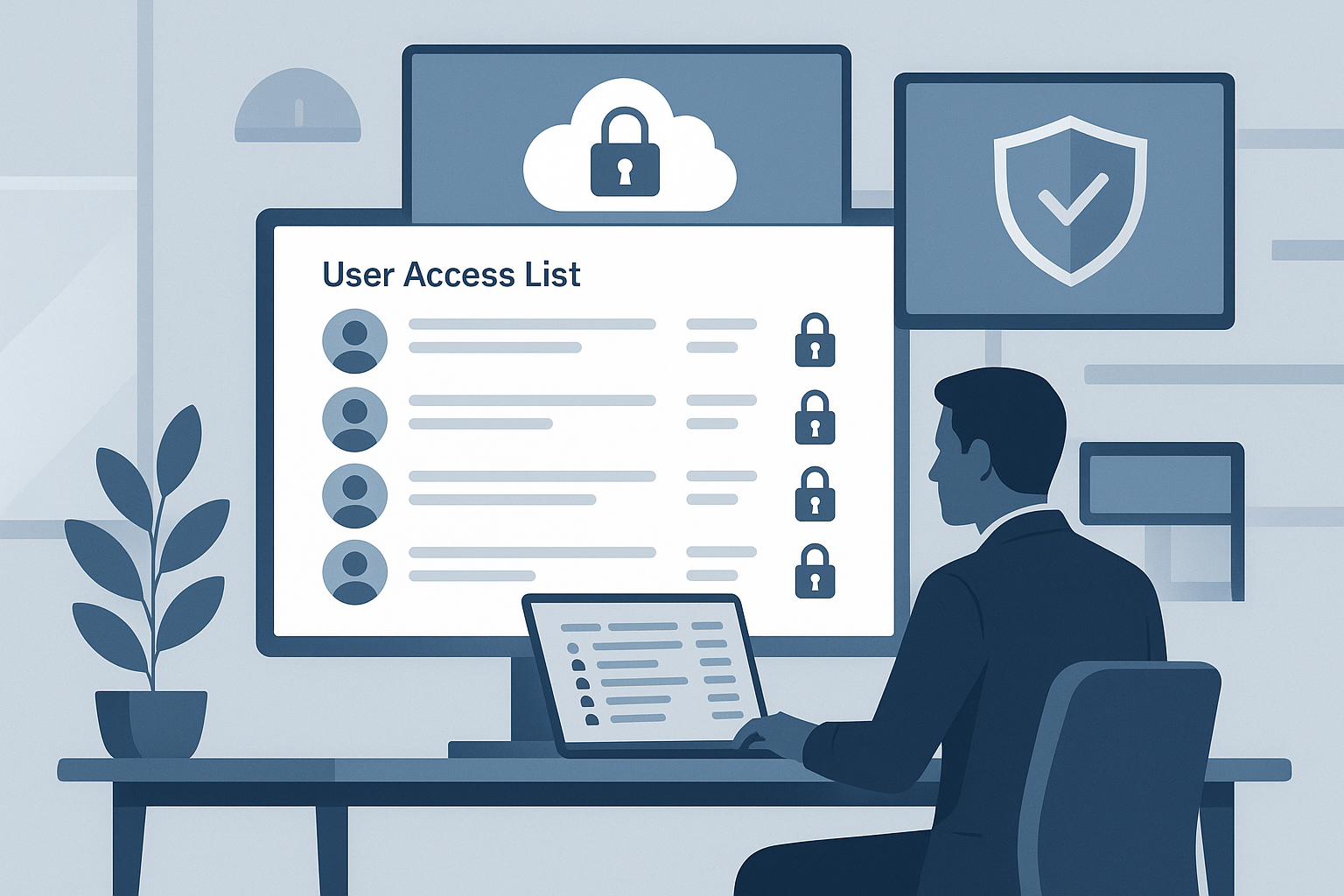
Employee onboarding is not just an HR process. It is also a security control.
A structured onboarding process helps organizations:
- control access to systems and data,
- secure company devices,
- communicate security expectations,
- maintain operational consistency,
- and retain evidence for future audits or customer reviews.
Many of the issues organizations encounter during SOC 2 preparation actually begin with inconsistent onboarding and offboarding processes.
Common examples include:
- former employees retaining access,
- missing device inventory records,
- untracked SaaS application access,
- inconsistent MFA usage,
- and undocumented policy acknowledgements.
Building a repeatable onboarding process early helps reduce risk and makes future compliance efforts significantly easier.
Related reading:
SOC 2 Preparation: Security Basics Small Businesses Can Implement Now
What Should a Secure Employee Onboarding Process Include?
For most small businesses, secure onboarding should focus on a few foundational areas:
- controlled access provisioning,
- MFA setup,
- device security,
- employee security awareness,
- policy acknowledgements,
- and documented offboarding procedures.
The goal does not need to be perfection. The goal is consistency.
Organizations that document onboarding processes early are typically in a much stronger position later when customers, vendors, insurers, or auditors begin asking security-related questions.
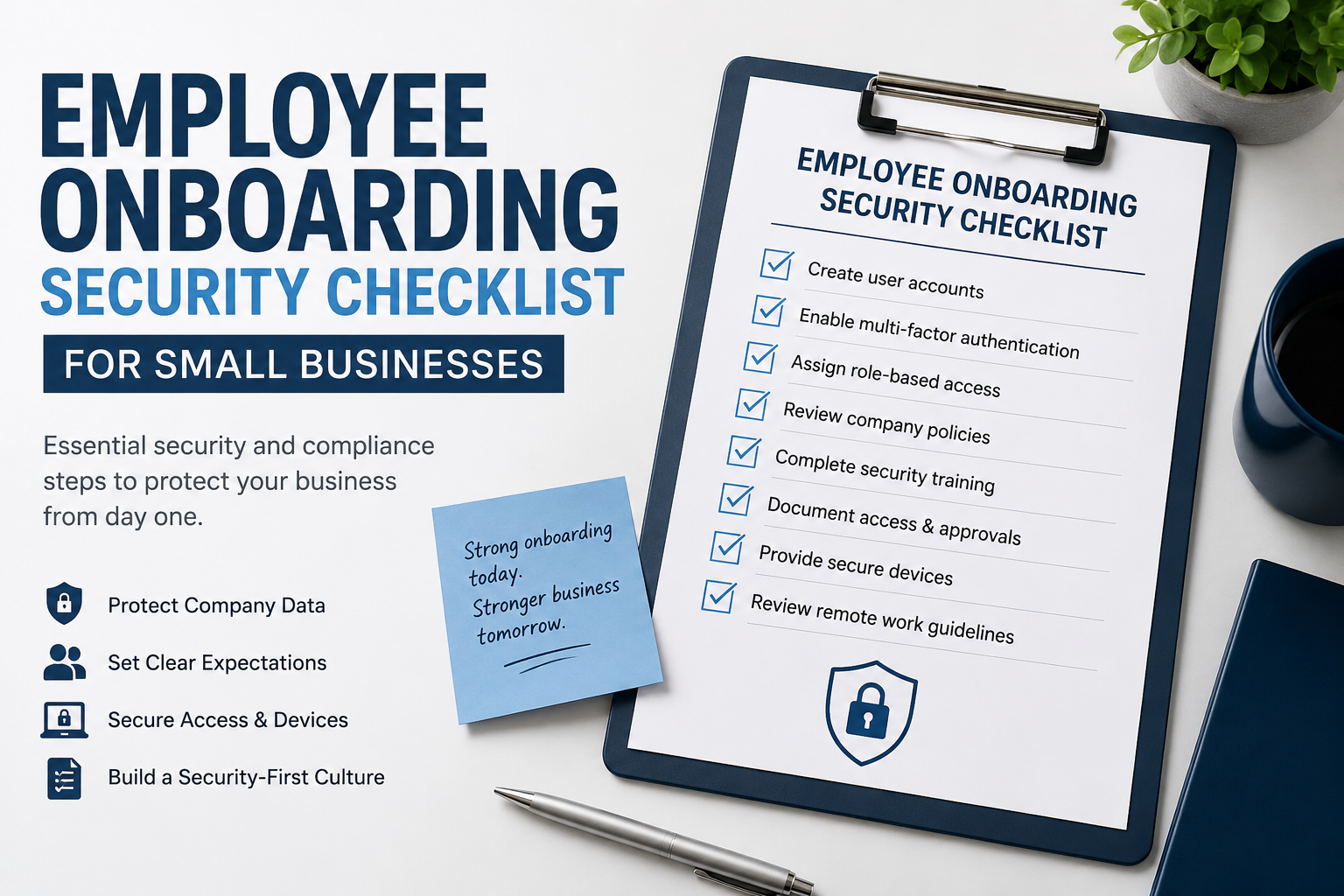
Download the Employee Onboarding Security Checklist
To help small businesses implement a more structured onboarding process, we created a practical onboarding security checklist covering:
- access approvals,
- MFA setup,
- device assignment,
- employee cybersecurity training,
- SaaS application access,
- policy acknowledgements,
- and offboarding preparation.
Download the free Employee Onboarding Security Checklist for Small Businesses
Key Areas Small Businesses Should Focus On
Access Control and MFA
New employees should only receive access to the systems they actually need. Access approvals should be documented, and multi-factor authentication (MFA) should be enabled during onboarding, not added later.
Even simple access tracking can significantly improve security and support future access reviews.
Device Security
If employees receive company devices, organizations should verify that:
- endpoint protection is installed,
- encryption is enabled,
- and automatic updates are configured.
Maintaining a basic device inventory also becomes increasingly important as organizations grow.
Security Awareness and Policies
Employees should understand:
- password expectations,
- phishing risks,
- acceptable use requirements,
- and how to report security concerns.
Organizations should also maintain documented policy acknowledgements where possible.
Offboarding Preparation
Strong offboarding starts with strong onboarding documentation.
Organizations should maintain records of:
- accounts created,
- systems assigned,
- and devices issued.
Without that information, removing access later becomes inconsistent and risky.
Final Thoughts
Many small businesses assume cybersecurity maturity starts with expensive tools or formal audits.
In reality, it often starts with repeatable operational processes.
Employee onboarding is one of the easiest places to begin improving security, governance, and compliance readiness.
Organizations that implement structured onboarding processes early are usually much better prepared later when:
- customers request security information,
- cyber insurance requirements increase,
- or SOC 2 preparation begins.
Starting early helps reduce risk, improve consistency, and avoid scrambling later.
To learn more about building foundational security controls for SOC 2 readiness, visit:
https://j-sas.com/soc-2-preparation-security-basics/